Skip to content


Table of Contents
Patients at CONTŌR ask a version of the same question almost every week: if filler is filler, why do some options take months to show up? The answer sits in how each product behaves once it is under the skin. Biostimulatory fillers and traditional hyaluronic acid fillers solve different problems on different timelines, with different trade-offs attached. Here is how the two categories compare, and how Sculptra and Radiesse differ from each other.
What is the difference between biostimulatory fillers and traditional fillers?
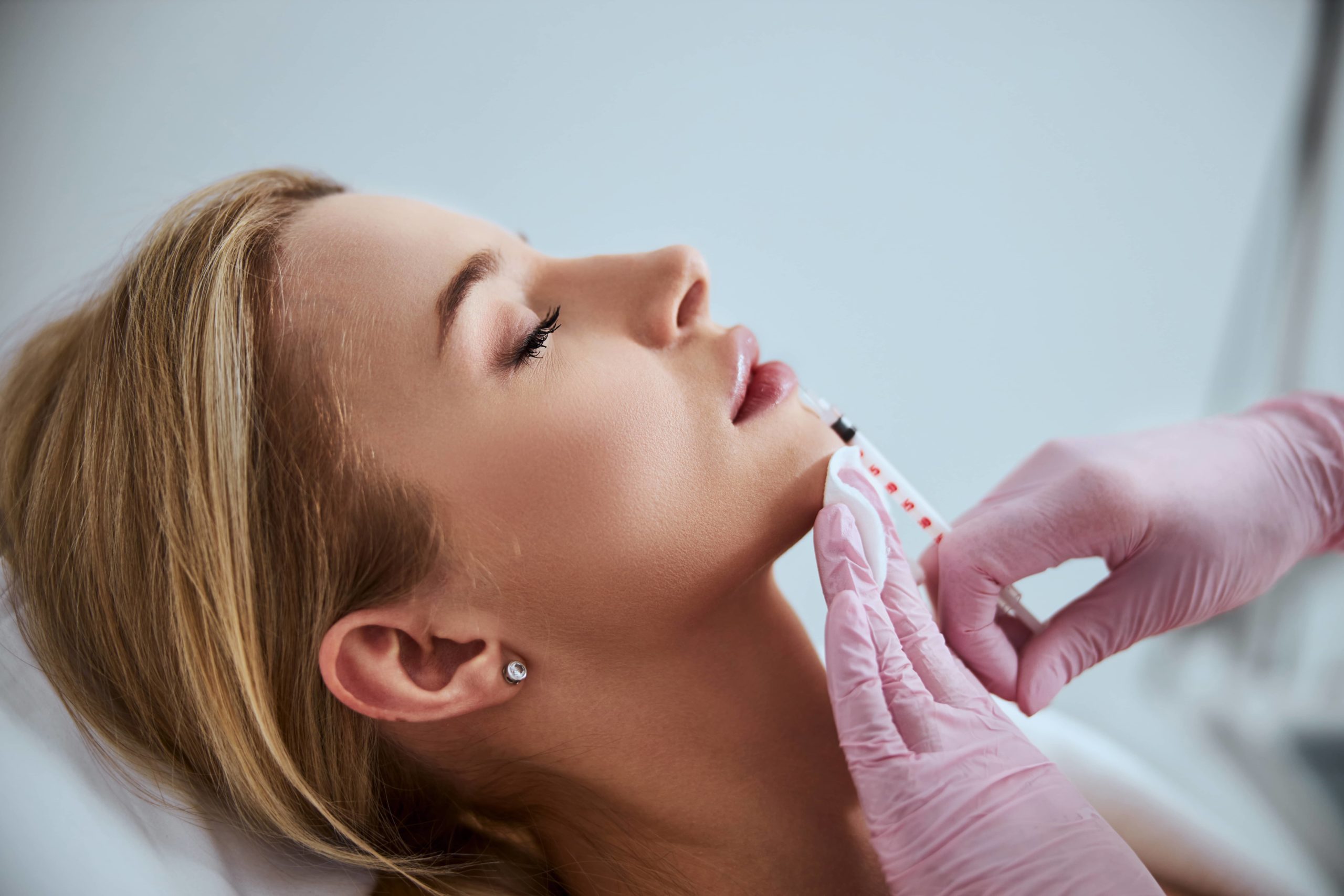
Traditional hyaluronic acid filler adds volume the moment it is injected and can be dissolved later if needed. A biostimulatory filler such as Sculptra or Radiesse prompts your own body to produce collagen, rebuilding facial structure gradually over several weeks to months. Results develop more slowly, typically last longer, and cannot be reversed.
The Core Difference: Adding Volume vs. Building It
Traditional fillers place volume; biostimulators grow it. Hyaluronic acid products like Juvéderm® and Restylane® occupy space immediately and attract water, so the correction is visible the same day. Biostimulatory fillers act more like a scaffold, triggering collagen stimulation so the body rebuilds its own support over time.
That single mechanical difference explains everything downstream: how fast results appear, how long they last, and whether they can be undone. Neither category is an upgrade on the other. They answer different questions.
How Sculptra Works and Who It Suits
Sculptra® is made of poly-L-lactic acid, or PLLA, a biocompatible material that stimulates gradual collagen production rather than filling a space directly. It is FDA-approved for people with healthy immune systems for correction of shallow to deep nasolabial fold contour deficiencies, fine lines and wrinkles in the cheek region, and other facial wrinkles.
Most patients begin noticing change over several weeks, with fuller effect typically around four to six months after completing treatment. A series of two to three sessions spaced four to six weeks apart is common. Sculptra suits broad, diffuse volume restoration and overall skin quality, especially for patients who want change that no one can date to a single appointment.
How Radiesse Works and Who It Suits
Radiesse® contains calcium hydroxylapatite, or CaHA, microspheres suspended in a gel carrier. The gel provides structural support on injection, then the microspheres stimulate collagen as the carrier breaks down. Radiesse is FDA-approved for moderate to severe facial wrinkles and folds, and Radiesse (+) carries an approval for improvement of moderate to severe loss of jawline contour in adults over 21.
Patients generally see immediate support, with continued improvement developing over roughly three to four months. One to two sessions often achieve the goal. Radiesse tends to suit the jawline, chin, and lower face, where defined structure is the point.
Sculptra vs. Radiesse: The Differences That Actually Change Your Decision
Timeline, not longevity, drives most decisions between the two.
| Sculptra | Radiesse | |
| Material | Poly-L-lactic acid (PLLA) | Calcium hydroxylapatite (CaHA) |
| Immediate result | Minimal | Yes, structural support |
| Full effect | Around 4 to 6 months | Roughly 3 to 4 months |
| Typical duration | Up to 2 years or more | About 12 to 18 months |
| Usual sessions | 2 to 3 | 1 to 2 |
Sculptra rewards patience and generally lasts longer. Radiesse shows up sooner and defines structure faster. Individual response varies with anatomy, metabolism, and the area treated, so these ranges are typical outcomes rather than promises.
What Traditional Fillers Still Do Better
Hyaluronic acid remains the better tool in several situations. It places volume precisely in delicate, mobile areas such as the lips, where exact placement counts more than collagen building. It delivers predictable correction when a patient has a date on the calendar. Most importantly, it can be dissolved with hyaluronidase if the result is not what the patient wanted.
In practice, the most convincing natural facial rejuvenation usually comes from using both categories together rather than picking a side.
The Trade-Off Nobody Should Skip: Biostimulators Cannot Be Dissolved
Biostimulatory products are not reversible. Hyaluronidase does not break down PLLA or CaHA, so results soften on their own schedule rather than yours. Candidacy assessment, conservative placement, and injector experience therefore carry more weight with these products than with hyaluronic acid.
Temporary swelling, redness, and bruising are common and usually resolve within a few days. Nodule formation is uncommon but real, which is why technique and aftercare are not optional. Sculptra in particular requires diligent at-home massage after treatment to support even distribution.
How a Provider Decides Which One Fits You
Our Team at CONTŌR assesses facial structure, degree of volume loss, skin quality, and how quickly you want to see change before recommending either product. Commonly treated areas include the cheeks, nasolabial folds, jawline, chin, and temples, though not every area carries an FDA approval for every product and some placements are used off-label.
Stage generally outweighs age. Proactive patients in their late twenties and thirties and those with early to moderate laxity can both be reasonable candidates for biostimulatory filler treatment. These treatments are not suitable during pregnancy or breastfeeding, and CONTŌR does not treat minors.
Common Questions About Biostimulatory and Traditional Fillers
Can the two be combined? Yes. Many plans use a biostimulator for foundational structure and hyaluronic acid for precise detail.
Does one hurt more? Most patients report mild pressure with either, and topical numbing is used for comfort.
Is there downtime? Generally minimal, with most patients returning to normal activity the same day.
Can I switch later? Yes, once a provider reviews what is already in place.
Choosing Between Them Comes Down to Timeline and Goals
Immediate and reversible, or gradual and structural. That is the real choice between traditional filler and biostimulatory fillers NYC patients are researching, and neither answer is automatically correct. Your anatomy, your goals, and how soon you want results decide it.
If you are deciding between these options, an in-person assessment is the clearest next step. Book Your Biostimulatory Filler Consultation Today, and our providers will walk you through what fits your face and your timeline.