Skip to content

Table of Contents
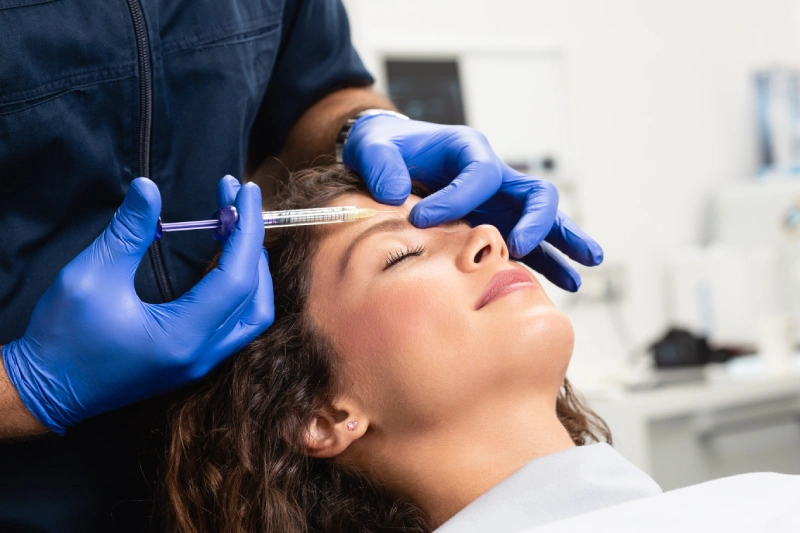
Most people think about Botox after the wrinkles have already settled in. By then, the goal shifts from prevention to correction, and the treatment plan changes significantly. The smarter window, the one most people miss, is earlier than you’d expect.
If you’re in your mid-to-late 20s or early 30s and starting to notice lines that linger after you’ve stopped making an expression, this is exactly the conversation you need to have.
When should you start preventative Botox?
Most people benefit from starting in their mid-to-late 20s or early 30s, when fine lines begin appearing at rest rather than only during facial expressions.
What “Preventative” Actually Means
There’s an important distinction between preventative and corrective Botox, and it shapes everything about timing.
Corrective Botox addresses lines that are already etched into the skin at rest. Preventative Botox works before that stage. The logic is straightforward: facial expressions like squinting, frowning, and raising your eyebrows happen hundreds of times a day. Over the years, that repeated muscle movement folds the skin in the same place, and eventually those folds stop bouncing back. Preventative injectables interrupt that pattern before it becomes permanent.
At CONTŌR Studios in NYC, the approach to natural-looking Botox starts with understanding your movement patterns, not just treating visible lines.
When to Start: The Real Timing Indicators
This is where most of the confusion lives. People assume there’s a specific age when Botox becomes appropriate, but the more accurate answer is that it depends on what your skin is doing, not what year you were born.
The clearest signal is the presence of fine lines at rest. If you relax your face completely and a line is still visible across your forehead or between your brows, that’s your skin beginning to hold the crease. That’s the moment when a wrinkle-prevention treatment becomes genuinely useful rather than premature.
Beyond that single indicator, a few other factors can move that window earlier:
- Significant sun exposure over the years, which breaks down collagen faster and accelerates surface creasing
- Naturally expressive facial habits, like frequent squinting or furrowing, that put consistent pressure on the same areas
- Family history of deep-set lines forming in the 30s, which can be a strong signal of your own trajectory
As a general reference, the mid-20s to early 30s is the most common starting point for wrinkle prevention for NYC patients who want to stay ahead of the curve. And here’s the practical upside to starting earlier: lighter doses tend to be sufficient, and you’re less likely to need frequent corrective sessions down the line. It’s a more gradual, sustainable approach to anti-aging injectables overall.
Where Preventative Botox Works Best
Not every area of the face requires the same attention early on. The zones that benefit most from early Botox for fine lines are the ones with the highest repetitive muscle movement:
- Forehead lines – involved in nearly every expression you make throughout the day
- Frown lines (the “11s”) – the vertical lines between the brows that form from years of concentrating, squinting, or furrowing
- Crow’s feet – develop from squinting and smiling, and tend to deepen faster because the skin around the eyes is naturally thinner.
These three areas are the standard starting point for most preventative injectable consultations, and they offer the most meaningful results in slowing visible aging.
How Scheduling Keeps Results Looking Natural
One of the most common misconceptions about Botox is that the “overdone” look comes from the treatment itself. In most cases, it comes from inconsistent treatment or overcorrecting after a lapse.
Natural-looking Botox results come from a consistent, planned schedule, not from reactive appointments when the lines have fully returned. For most patients, that means coming in every three to four months. Staying on that cadence means your injector works with your muscles in a relaxed, manageable state each time, allowing for precise, lighter adjustments.
Here’s what happens when the schedule slips:
- The muscles fully regain their strength between appointments
- The skin starts re-creasing in those same high-movement zones
- Catching up often requires more product, which is exactly the pattern that leads to results that look overdone rather than refreshed.
Experienced injectors also adjust dosage over time based on how your specific muscles respond. Anti-aging injectables are not a one-size approach, and a good treatment plan evolves with you.
What to Expect at Your First Appointment
Your first preventative consultation at CONTŌR Studios is less about treating visible lines and more about understanding how your face moves. The focus is on mapping your muscle activity and identifying which areas show early signs of creasing with repeated movement.
Realistic expectations matter here. The goal of a first natural-looking Botox appointment is subtle restriction, not a dramatic change. Most patients leave looking like themselves, just slightly more rested and smooth. The visible difference builds gradually over consistent appointments, which is exactly the point.
Ready to Get Ahead of It? Start Here.
The best time to consider preventative Botox is before the lines become permanent, and for most people, that window is earlier than they realize. If you’ve been noticing early movement-based lines and wondering whether now is the right time, a consultation is the most practical next step.
CONTŌR Studios offers personalized wrinkle-prevention consultations for patients seeking a considered, natural approach to aging. Book Your Preventative Injectables Consultation Today and find out what a treatment plan built around your skin actually looks like, here in Botox New York, NY.